antitrust

Derecho de la Competencia: Investigación de Mercado – Oxígeno Medicinal 150 150 Pablo Trevisán

Derecho de la Competencia: Investigación de Mercado – Oxígeno Medicinal

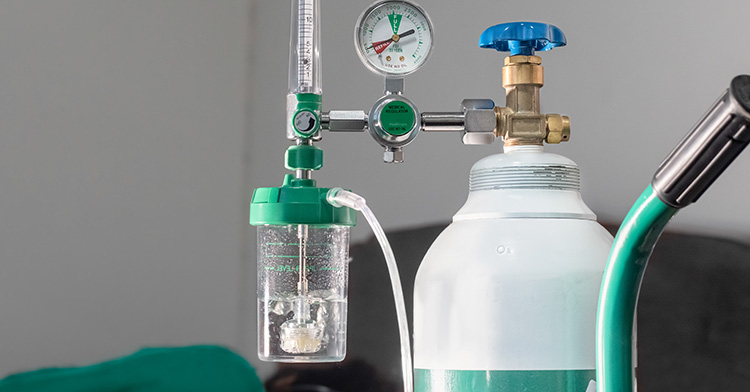
Close-up of medical oxygen flow meter  shows low oxygen or an ne

La CNDC dispuso recomendaciones pro-competitivas al Ministerio de Salud de la Nación y a la Administración Nacional de Medicamentos, Alimentos y Tecnología (ANMAT) para que evalúen (a) incluir el oxígeno medicinal 93% en la Farmacopea Argentina, de acuerdo con los estándares internacionales, y (b) Adecuar la normativa relativa a la obtención de oxígeno medicinal por el método de presión por adsorción (PSA) de acuerdo con los estándares internacionales, posibilitando su efectiva aplicación y comercialización en todo el territorio nacional.

Esta Investigación de Mercado (IM) se inició a mediados de 2017. El objetivo de la IM era monitorear el mercado de oxígeno medicinal en lo atinente a sus precios, cantidades, modalidades de compra y otras condiciones comerciales relevantes desde el punto de vista de la competencia.

El oxígeno medicinal es un gas de carácter fundamental en el tratamiento de enfermedades. El uso principal es la terapia con oxígeno en casos de hipoxia (oxigenación insuficiente de los tejidos). También se emplea en el tratamiento de enfermedades pulmonares obstructivas, envenenamiento por monóxido de carbono, neumonías, infartos de miocardio, distensión abdominal, neumotórax y embolia gaseosa. Sirve como diluyente de anestésicos, tanto gaseosos como volátiles.

La CNDC identificó los principales aspectos asociados a la dinámica competitiva del mercado de oxígeno medicinal en la Argentina, y concluyó que la estructura de mercado a nivel nacional se encuentra altamente concentrada. Además, observó que la dinámica competitiva es escasa: las participaciones son estables a lo largo del tiempo y los clientes no cambian de proveedor. Además, es un mercado con altas barreras a la entrada debido a la fuerte inversión que requiere.

En Argentina existen tres grandes empresas que concentran prácticamente el 90% del mercado: las recientemente fusionadas Linde/Praxair, Air Liquide e Indura (subsidiaria local de Air Products).

La tecnología principal para la obtención de oxígeno medicinal es la licuefacción del aire por el método criogénico. El oxígeno se obtiene en estado líquido y es transportado a los establecimientos de salud donde se almacena en tanques criogénicos y se regasifica para su aplicación en pacientes. En las terapias domiciliarias, el uso es a través de cilindros que almacenan oxígeno en estado gaseoso. Existen otras tecnologías para la obtención de oxígeno medicinal. Una de ellas es la tecnología por adsorción del aire (PSA), que logra un oxígeno con un nivel de pureza 93% +/- 3%. Las máquinas que obtienen el oxígeno por método PSA se instalan en los centros de salud y permiten el autoabastecimiento. Así, los centros de salud se convierten en productores del oxígeno que ellos mismos consumen.

La CNDC considera que la normativa vigente podría estar limitando la proliferación de generadores de oxígeno por medio de tecnología PSA en los centros de salud públicos y privados en todo el país. En términos de defensa de la competencia, el oxígeno producido por método PSA podría funcionar como un producto sustituto del oxígeno producido mediante el método tradicional, al menos para algunos usos. Por ese motivo, y en línea con las farmacopeas internacionalmente reconocidas que poseen una regulación que permite el desarrollo del método PSA, la CNDC dispuso la recomendación pro-competitiva antes mencionada.

Para leer la Disposición de la CNDC, haga click aquí.

Competition Law: ABA Antitrust in the Americas Conference 2023 150 150 Estudio Trevisan

Competition Law: ABA Antitrust in the Americas Conference 2023

Screen Shot 2023-05-22 at 10.04.13 PM

Panelists will explore how highly variable competition law regimes and levels of complexity and development in enforcement, particularly in Latin America, present a big challenge vis-à-vis the changing environment of today’s antitrust laws and policies around the world.

With speakers from Mercado Libre, AB InBev, Meta, OLX Brasil and Novartis, this panel will provide insight into how to best manage in-house counsels’ challenges, whether they involve multi-jurisdictional mergers, agency investigations, administration of compliance programs, or giving advice on commercial matters to business teams.

For more information, including how to register, click here.

Derecho de la Competencia: Actualización de la Unidad Móvil 150 150 Estudio Trevisan

Derecho de la Competencia: Actualización de la Unidad Móvil

230211 Nuevo Valor UM

El concepto de la Unidad Móvil (UM) surge en el año 2018, mediante el artículo 85 de la Ley N° 27.442 (LDC), qué establece a la UM como unidad de cuenta, y se estableció su valor inicial en PESOS VEINTE ($ 20), disponiéndose que fuera actualizado en forma anual utilizando el Índice de Precios al Consumidor (I.P.C.) que publica el Instituto Nacional de Estadisticas y Censos (INDEC), organismo desconcentrado en el ámbito del Ministerio de Economía.

En este contexto, mediante la la Resolución de la Secretaría de Comercio SC 63/2023, se establece que el valor de la UM pasa a ser de $162,55, con vigencia a partir del  día 8 de febrero de 2023.

Consecuentemente, la serie de valores estipulados en los artículos 9°, 11, 33, 55, 59 y 84 de la LDC, deberán calcularse sobre la UM que determina la Resol. SC 63/2023, dispuesta para este año 2023.

Antitrust: Competition Authority Sanctions Wheat Flour Cartel 150 150 Estudio Trevisan

Antitrust: Competition Authority Sanctions Wheat Flour Cartel

Harina

Through Resolution 332/2022, of April 1, 2022 -published today in the Official Gazette-, the Secretary of Internal Trade (SCI), following CNDC’s Opinion IF-2022-26154360-APN-CNDC# MDP dated March 18, 2022, resolved “to declare responsible the firm MOLINO CAÑUELAS S.A.C.I.F.I.A., the FEDERACIÓN ARGENTINA DE LA INDUSTRIA MOLINERA, CÁMARA DE INDUSTRIALES MOLINEROS and ASOCIACIÓN PEQUEÑAS Y MEDIANAS INDUSTRIAS MOLINERAS DE LA REPÚBLICA ARGENTINA, for executing a concerted horizontal practice of setting minimum prices and exchanging sensitive information in the wheat milling market and the marketing of wheat flour throughout the national territory, affecting the general economic interest, violating the provisions of Section 1 of Law No. 27,442, specifically subsections a) of Section 2 and a) of Section 3 of said regulatory plexus.”

Consequently, the SCI resolved:

(i) Impose (i) on the firm MOLINO CAÑUELAS S.A.C.I.F.I.A., a fine in the amount of AR$150,000,000; (ii) to the FEDERACIÓN ARGENTINA DE LA INDUSTRIA MOLINERA, a fine in the amount of $150,000,000; (iii) to the CÁMARA DE INDUSTRIALES MOLINEROS a fine in the amount of $93,974,602; and (iv) the ASOCIACIÓN PEQUEÑAS Y MEDIANAS INDUSTRIAS MOLINERAS DE LA REPÚBLICA ARGENTINA, a fine in the amount of $51,131,995; in accordance with the provisions of Section 46 of Law 25,156;

(ii) Order said entities to cease and refrain from entering into price-fixing agreements and exchanging sensitive information in the wheat milling market and the marketing of wheat flour; Y

(iii) Order the FEDERACIÓN ARGENTINA DE LA INDUSTRIA MOLINERA, the CÁMARA DE INDUSTRIALES MOLINEROS and the ASOCIACIÓN PEQUEÑAS Y MEDIANAS INDUSTRIAS MOLINERAS DE LA REPÚBLICA ARGENTINA to publish the «Guide on Defense of Competition for Business Associations and Chambers and Professional Associations and Associations ” published on the website of the NATIONAL COMMISSION FOR THE DEFENSE OF COMPETITION in their respective web domains or in the one they use from time to time.

Among the recitals of Resolution 332/2022, it is highlighted that:

(A) Due to the analysis carried out by the CNDC, it was concluded that the GENERAL AGREEMENT FOR THE DEFENSE OF FREE COMPETITION IN THE MILLING SECTOR (document that was denounced by the firm IMPULSAR (INDUSTRIAS MEDIANAS Y PEQUEÑAS UNIDAS LOCALES SOCIEDAD ARGENTINA) in its complaint to the CNDC dated April 4, 2017): “(i) it was conceived, designed, implemented and monitored by the milling entities, the FEDERACIÓN ARGENTINA DE LA INDUSTRIA MOLINERA, the CÁMARA DE INDUSTRIALES MOLINEROS and the ASOCIACIÓN PEQUEÑAS Y MEDIANAS INDUSTRIAS MOLINERAS DE LA REPÚBLICA ARGENTINA and the firm MOLINO CAÑUELAS S.A.C.I.F.I.A.; (ii) was signed by at least ONE HUNDRED SEVEN (107) milling companies on August 13, 2015 at the SHERATON HOTEL; (iii) had an auditing system in place to monitor compliance; (iv) established a system of sanctions for non-compliance; and (v) the expected reference cost was calculated at the request of the FEDERACIÓN ARGENTINA DE LA INDUSTRIA MOLINERA, through the signing of an agreement with a university institution”; and

(B) Said GENERAL AGREEMENT FOR THE DEFENSE OF FREE COMPETITION IN THE MILLING SECTOR sets up a horizontal collusive practice between the defendants, for setting minimum sales prices and exchanging sensitive information, in order to limit competition between milling companies in the wheat milling market and the commercialization of wheat flour throughout the national territory, being detrimental to free competition and the general economic interest.

Private Enforcement – Damages: It is important to highlight, that in accordance with Section 62 of Law 27,442, «individuals or legal entities affected by acts prohibited by this law, may bring an action for reparation of damages in accordance with the norms of civil law, before the competent judge in that matter.»

Source: https://www.boletinoficial.gob.ar/detalleAviso/primera/260423/20220405

Derecho de la Competencia: Importante Sanción por Cartelización en Mercado de Harina de Trigo 150 150 Estudio Trevisan

Derecho de la Competencia: Importante Sanción por Cartelización en Mercado de Harina de Trigo

Harina

Mediante la Resolución 332/2022, del 1 de abril de 2022 -publicada en el día de la fecha en el Boletín Oficial-, la Secretaría de Comercio Interior (SCI), haciendo propio el Dictamen IF-2022-26154360-APN-CNDC#MDP de fecha 18 de marzo de 2022, de la Comisión Nacional de Defensa de la Competencia (CNDC), resolvió “declarar responsables a la firma MOLINO CAÑUELAS S.A.C.I.F.I.A., a la FEDERACIÓN ARGENTINA DE LA INDUSTRIA MOLINERA, a la CÁMARA DE INDUSTRIALES MOLINEROS y a la ASOCIACIÓN PEQUEÑAS Y MEDIANAS INDUSTRIAS MOLINERAS DE LA REPÚBLICA ARGENTINA, por ejecutar una práctica horizontal concertada de fijación de precios mínimos e intercambio de información sensible en el mercado de la molienda de trigo y la comercialización de harina de trigo en todo el territorio nacional, con afectación al interés económico general, infringiendo lo dispuesto en el Artículo 1° de la Ley N° 27.442, específicamente en los incisos a) del Artículo 2° y a) del Artículo 3° de dicho plexo normativo”.

En consecuencia, el SCI resolvió:

(i)              Imponer (i) a la firma MOLINO CAÑUELAS S.A.C.I.F.I.A., una multa por la suma de $150.000.000; (ii) a la FEDERACIÓN ARGENTINA DE LA INDUSTRIA MOLINERA, una multa por la suma de $ 150.000.000; (iii) a la CÁMARA DE INDUSTRIALES MOLINEROS una multa por la suma de $93.974.602; y (iv) a la ASOCIACIÓN PEQUEÑAS Y MEDIANAS INDUSTRIAS MOLINERAS DE LA REPÚBLICA ARGENTINA, una multa por la suma de $51.131.995; de conformidad con lo dispuesto en el Artículo 46 de la Ley 25.156;

(ii)            Ordenar a dichas entidades que cesen y se abstengan de realizar acuerdos de fijación de precios e intercambiar información sensible, en el mercado de la molienda de trigo y la comercialización de harina de trigo; y

(iii)           Ordenar la FEDERACIÓN ARGENTINA DE LA INDUSTRIA MOLINERA, a la CÁMARA DE INDUSTRIALES MOLINEROS y a la ASOCIACIÓN PEQUEÑAS Y MEDIANAS INDUSTRIAS MOLINERAS DE LA REPÚBLICA ARGENTINA que publiquen la “Guía sobre Defensa de la Competencia para Asociaciones y Cámaras Empresariales y Colegios y Asociaciones Profesionales” publicada en el sitio web de la COMISIÓN NACIONAL DE DEFENSA DE LA COMPETENCIA en sus respectivos dominios web o en el que utilicen oportunamente.

Entre los considerandos de la Resolución 332/2022 se destaca que:

(A) En razón del análisis  efectuado por la CNDC, se concluyó que el ACUERDO GENERAL DE DEFENSA DE LA LIBRE COMPETENCIA EN EL SECTOR MOLINERO (documento que fuera denunciado por la firma IMPULSAR (INDUSTRIAS MEDIANAS Y PEQUEÑAS UNIDAS LOCALES SOCIEDAD ARGENTINA) Simple Asociación en su denuncia ante la CNDC de fecha 4 de abril de 2017): “(i) fue ideado, diseñado, implementado y monitoreado por las entidades molineras, FEDERACIÓN ARGENTINA DE LA INDUSTRIA MOLINERA, CÁMARA DE INDUSTRIALES MOLINEROS y ASOCIACIÓN PEQUEÑAS Y MEDIANAS INDUSTRIAS MOLINERAS DE LA REPÚBLICA ARGENTINA, y la firma MOLINO CAÑUELAS S.A.C.I.F.I.A.; (ii) fue suscripto al menos por CIENTO SIETE (107) empresas molineras el día 13 de agosto de 2015 en el HOTEL SHERATON; (iii) contó con un sistema de auditorías con el objetivo de monitorear su cumplimiento; (iv) estableció un sistema de sanciones por incumplimiento; y (v) el costo de referencia previsto fue calculado a pedido de la FEDERACIÓN ARGENTINA DE LA INDUSTRIA MOLINERA, mediante la suscripción de un convenio con una institución universitaria”; y

(B) Dicho ACUERDO GENERAL DE DEFENSA DE LA LIBRE COMPETENCIA EN EL SECTOR MOLINERO configura una práctica colusiva horizontal entre las imputadas, para la fijación de precios mínimos de venta e intercambio de información sensible, con el objeto de limitar la competencia entre las empresas molineras en el mercado de la molienda de trigo y la comercialización de harina de trigo en todo el territorio nacional, resultando perjudicial para la libre competencia y el interés económico general.

De la reparación de daños y perjuicios. Se recuerda que, conforme a lo dispuesto por el artículo 62 de la Ley 27.442, “las personas humanas o jurídicas damnificadas por los actos prohibidos por esta ley, podrán ejercer la acción de reparación de daños y perjuicios conforme las normas del derecho común, ante el juez competente en esa materia”.

Fuente: https://www.boletinoficial.gob.ar/detalleAviso/primera/260423/20220405

Competition Law: The New Value of the Mobile Unit is published 150 150 Pablo Trevisán

Competition Law: The New Value of the Mobile Unit is published

Defensa-de-la-Competencia-740x357

In compliance with the provisions of the Argentine Competition Law No. 27,442 (LDC), through Resolution of the Secretary of Domestic Trade No. 35/2022 -RESOL-2022-35-APN-SCI#MDP- (Resolution 35/20 ), published today in the Official Gazette, the new value of the Mobile Unit (UM) was announced.

Article 85 of the LDC defined the UM as a unit of account and established its initial value at twenty pesos ($20). The same article 85 establishes that the value of the UM will be updated automatically every year, using the variation of the Consumer Price Index (CPI) published by the NATIONAL INSTITUTE OF STATISTICS AND CENSUSES (INDEC, for its Spanish acronym), a decentralized body in the field of MINISTRY OF ECONOMY.

Said mobile unit is used to define a series of values ​​established in various articles of the LDC. Mainly, the value of the UM is related to the determination of the thresholds for the notification of economic concentration operations (M&A) before the enforcement authority of the LDC (that is, when they must be notified or when they would be exempt from doing so), the maximum and minimum rates or notification fees that the enforcement authority could apply (which, to date, has never been applied by said authority) and the amounts of the applicable fines.

Resolution 35/22 considers that «the variation between December 2020 and December 2021 has been FIFTY AND NINETY-FOUR HUNDREDTH PERCENT (50.94%)».

Consequently, applying said variation to the value of the UM that was in force for the year 2021 (which, to date, was $55.29), the value of the UM “for the year 2022 must be eighty-three pesos and forty-five cents ($83.45)”.

Defensa de la Competencia: Se Publica el Nuevo Valor de la Unidad Móvil 150 150 Pablo Trevisán

Defensa de la Competencia: Se Publica el Nuevo Valor de la Unidad Móvil

Defensa-de-la-Competencia-740x357

En cumplimiento por lo ordenado por la Ley de Defensa de la Competencia Nº 27.442 (LDC), mediante Resolución de la Secretaría de Comercio Interior Nº 35/2022 -RESOL-2022-35-APN-SCI#MDP- (la Resolución 35/20), publicada en el Boletín Oficial el día de la fecha, se dio a conocer el nuevo valor de la Unidad Móvil (UM).

El artículo 85 de la LDC definió a la UM como una unidad de cuenta y estableció su valor inicial en veinte pesos ($ 20). El mismo artículo 85, establece que el valor de la UM será actualizado automáticamente cada un año, utilizando la variación del Índice de Precios al Consumidor (IPC) que publica el INSTITUTO NACIONAL DE ESTADÍSTICA Y CENSOS (INDEC), organismo desconcentrado en el ámbito del MINISTERIO DE ECONOMÍA.

Dicha unidad móvil es utilizada para definir una serie de valores establecidos en diversos artículos de la LDC. Principalmente, el valor de la UM tiene relación con la determinación de los umbrales para la notificación de operaciones de concentración económica (M&A) ante la autoridad de aplicación de la LDC (es decir, cuándo deben notificarse o cuándo estarían exentas de hacerlo), los máximos y mínimos del arancel o fee de notificación que podría aplicar la autoridad de aplicación (lo que, hasta la fecha del presente, nunca ha sido aplicado por dicha autoridad) y los montos de las multas aplicables.

La Resolución 35/22, considera que “la variación entre diciembre de 2020 y diciembre de 2021 ha sido de CINCUENTA CON NOVENTA Y CUATRO CENTÉSIMOS POR CIENTO (50,94%)”.

En consecuencia, aplicando dicha variación al valor de la UM que se encontraba vigente para el año 2021 (que, hasta el día de la fecha, fue de $ 55,29), surge que el valor de la UM «para el año 2022 deberá ser igual a pesos ochenta y tres con cuarenta y cinco centavos ($ 83,45)».

ASCOLA: Libro sobre COVID-19 & Competencia 150 150 admin

ASCOLA: Libro sobre COVID-19 & Competencia

Screen Shot 2020-07-30 at 5.02.16 PM

El libro fue publicado por el Capítulo Regional de América Latina de ASCOLA – Academic Society for Competition Law, y editado por Juan David Gutiérrez Rodríguez.

La obra cubre diez jurisdicciones de nuestra región: Argentina, Brasil, Chile, Colombia, Costa Rica, Ecuador, El Salvador, México, Perú y República Dominicana. La misma analiza todos los temas relevantes del derecho y la política de la competencia que entran en juego en la situación de emergencia sanitaria global como la que vivimos actualmente: acuerdos de colaboración entre competidores, la failing firm defense, el funcionamiento de las agencias y autoridades de competencia, compras directas, monitoreo y control de precios, concentraciones empresariales, acaparamiento, precios excesivos, carteles, relación del derecho de la competencia con el del consumidor, entre otros.

La obra completa puede consultarse y bajarse aquí.

Antitrust & Competition Law: Argentine Kintsugi 150 150 Pablo Trevisán

Antitrust & Competition Law: Argentine Kintsugi

IMG_5793

Today, Concurrences published a series of articles on «Antitrust and Developing and Emerging Economies», including Pablo Trevisán’s, Argentine Kintsugi. A summary of the article can be found in this brief video.


Watch Out! Competition Law and Policy are not Quarantined 150 150 Pablo Trevisán

Watch Out! Competition Law and Policy are not Quarantined

(This article was originally published by Pablo Trevisán on LinkedIn Pulse, on 5th April, 2020; link).

200403 image_190607_wolves_pr

Competition Law 27,442 (LDC), passed in May 2018, included several important innovations into the Argentine competition law regime.

Among others, it expanded the powers of the competition authority, which gave it greater independence, placing special emphasis on the seriousness of certain behaviours, in particular, collusive behaviour between two or more competitors.

The purpose of this brief comment is not to expand on the detail of the various developments of the LDC, we only try to make a few brief considerations about a new institute that received the LDC and that, apparently, has been overlooked to date.

We refer to Section 29 of the LDC, which provides: «The Competition Tribunal, in accordance with the provisions of the regulations, may by reasoned decision issue permits for the performance of contracts, agreements or arrangements that contemplate conducts included in Section 2 hereby, that at the discretion of the Tribunal do not constitute prejudice to the general economic interest. ”

It is important to remember that the new Section 2 of the LDC, referred to in Section 29, lists a series of conducts related to agreements between two or more competitors that, according to the new LDC, would constitute «absolutely restrictive practices of competition», it would be presumed «that produce damage to the general economic interest», would be «null» and «would produce no legal effect»; in addition to being liable to sanctions that may exceed several thousand million pesos.

The permits of Section 29 of the new LDC, can be a very valuable tool in certain circumstances, as long as they are used according to their purpose, on very particular cases and for duly justified reasons.

The situation we are currently facing, as a consequence of the various negative effects of the Covid-19 pandemic, provides the perfect framework to understand what this institute is about and to apply it in the way for which it was conceived by the legislator.

Since last month, we witnessed innumerable regulations that have been issued by the Executive Branch (as well as by the various provincial and municipal authorities, and various organizations).

During these weeks, the rule has been to hear references to concepts such as critical supplies, maximum prices, requests for increased production, various financial assistances, alleged shortages of certain products and medicinal, cleaning and sanitary supplies, among others.

For its part, the Ministry of Internal Commerce (SCI) resolved the suspension of procedural deadlines in the files that are processed by the National Commission for the Defence of Competition (CNDC). Notwithstanding this, an emergency filing mechanism was established and, although remotely, the CNDC and its entire team continue to work actively.

Likewise, around the world, the different competition authorities have also been reacting according to their respective situations and according to their applicable regulatory frameworks.

On the other hand, there have been many voices that suggest «mitigating», «relaxing» or «lessening» the application of competition rules, both in our country and abroad. We believe that this can be a very dangerous and unnecessary simplification, depending on how, when, where and for how long it is proposed.

In the case of our country, we start from the premise that Section 1 of the LDC provides that the Argentine competition regime protects the “general economic interest”. Said in more general terms, and leaving other more technical considerations aside, the general economic interest referred to by the LDC is none other than the public interest, applied to competition law and policy.

That said, it should be noted that the standards, principles and, not least, the spirit of the LDC continues – and must continue! – to have full force, even – or even more! – in the current situation of Covid-19.

In other words, collusion with a competitor continues to configure behaviour that is absolutely restrictive to competition and is presumed to cause damage to the general economic interest (Sections 2 and 3); abusing a dominant position in a certain market, either by setting abusive prices that impact consumers or by carrying out behaviours that could exclude competitors (Section 3, 5 and 6) or by carrying out economic concentrations whose object or effect is to restrict competition (Section 8), are still prohibited conduct under the LDC (Section 1).

However, it cannot be ignored that the different rules recently issued with the noble purpose of containing the spread of the pandemic in our country, could imply that certain people, whether they are natural (human) or legal persons, could be involuntarily immersed in complex situations, which could be framed in some of the previously mentioned behaviours.

In practice, there could be a collision of legitimate interests between various rules and behaviours, such as the interests that are intended to protect competition and those that are genuinely intended to protect the various health emergency rules issued during the last month.

To better illustrate, it would not be unusual for supermarkets or other players in the retail or consumer market distribution chain, at some point in the advance of the pandemic, to coordinate their behaviours to guarantee the provision of food; or that laboratories, distributors, drug wholesalers, pharmacies or others, must also agree on how to face the demand and supply of certain medicines or critical supplies in different regions of our country, just to name two critical areas -consumption and health- that, most likely, will be the most affected as the spread of the pandemic in our country progresses.

It is here where Section 29 of the new LDC takes its real dimension. Those entrepreneurs who find themselves in the aforementioned situation, on the one hand, are not exempt from complying with the competition rules, but on the other, they must also comply with the emergency rules.

In order to fully comply with the latter, the SCI –following the prior opinion of the CNDC- should analyse these cases and, if appropriate, issue clear permits, duly founded and of limited temporal and geographical scope, which would give certainty to all those who are faced with this dilemma.

Likewise, it could be the interested parties who may request these permits from the competition authority, justifying the reasons why they should be issued and, clearly, without them involving a letter of indemnity to commit any type of anti-competitive conduct.

If this is achieved, we will have successfully balanced the conflicting interests, probably contributing to a more optimal attack on the pandemic in the joint efforts of the public and private sectors, and, finally, the permits of the novel Section 29 of the LDC will have given birth healthily.


[1] Texto Ordenado de la Ley de Defensa de la Competencia 27.442 (acceso al enlace al 3 de abril de 2020): http://servicios.infoleg.gob.ar/infolegInternet/anexos/310000-314999/310241/norma.htm

[2] Art. 2, LDC: “Constituyen prácticas absolutamente restrictivas de la competencia y se presume que producen perjuicio al interés económico general, los acuerdos entre dos o más competidores, consistentes en contratos, convenios o arreglos cuyo objeto o efecto fuere: a) Concertar en forma directa o indirecta el precio de venta o compra de bienes o servicios al que se ofrecen o demanden en el mercado; b) Establecer obligaciones de (i) producir, procesar, distribuir, comprar o comercializar sólo una cantidad restringida o limitada de bienes, y/o (ii) prestar un número, volumen o frecuencia restringido o limitado de servicios; c) Repartir, dividir, distribuir, asignar o imponer en forma horizontal zonas, porciones o segmentos de mercados, clientes o fuentes de aprovisionamiento; d) Establecer, concertar o coordinar posturas o la abstención en licitaciones, concursos o subastas. Estos acuerdos serán nulos de pleno derecho y, en consecuencia, no producirán efecto jurídico alguno.”

[3] La reglamentación del art. 29, mediante el Decreto 480/2018, dista de ser abarcativa y clara; por lo que se requiere una nueva reglamentación, que respete cabalmente el espíritu de la LDC.

[4] https://www.boletinoficial.gob.ar/detalleAviso/primera/227413/20200403

[5] https://www.argentina.gob.ar/defensadelacompetencia/presentaciones-urgentes-covid (último acceso, 3 de abril 2020).

[6] Por ejemplo (en todos los casos, último acceso, 3 de abril 2020): (i) EE.UU.: Declaración Conjunta del FTC y el DOJ: https://www.ftc.gov/news-events/press-releases/2020/03/ftc-doj-announce-expedited-antitrust-procedure; (ii) Europa: Declaración de la European Competition Network, https://ec.europa.eu/competition/ecn/202003_joint-statement_ecn_corona-crisis.pdf; (iii) Reino Unido: CMA – Task Force para el COVID-19, https://www.gov.uk/government/publications/covid-19-cma-taskforce/cma-covid-19-taskforce; (iv) Australia: ACCC Autoriza Ventas Coordinadas entre Mayoristas en Mercado de Medicamentos, https://www.accc.gov.au/media-release/medicine-wholesalers-to-co-operate-on-access-to-pharmaceutical-products; (v) Noruega: Konkurranse Tilsynet – Autoridad de Competencia de Noruega, Otorga Excepción Temporal a Sector de Transporte, https://konkurransetilsynet.no/transportation-sector-is-granted-temporary-exception-from-the-competition-act/?lang=en; (vi) Sudáfrica: Comisión de Competencia – Inusual, por COVID-19, recibe más de 500 Denuncias por Precios Excesivos, http://www.compcom.co.za/wp-content/uploads/2020/03/CCSA-COVID-19-statement-31-March-2020-Final-1.pdf; (vii) Chile: FNE – Declaración Pública, https://www.fne.gob.cl/declaracion-publica/, entre otros.

[7] Por ejemplo, consideraciones respecto a si ello se refiere más al bienestar de los consumidores, de los productores, de ambos, o a otras finalidades.