Entradas Por :

Pablo Trevisán

Antitrust & Competition Law: Argentine Kintsugi 150 150 Pablo Trevisán

Antitrust & Competition Law: Argentine Kintsugi
IMG_5793

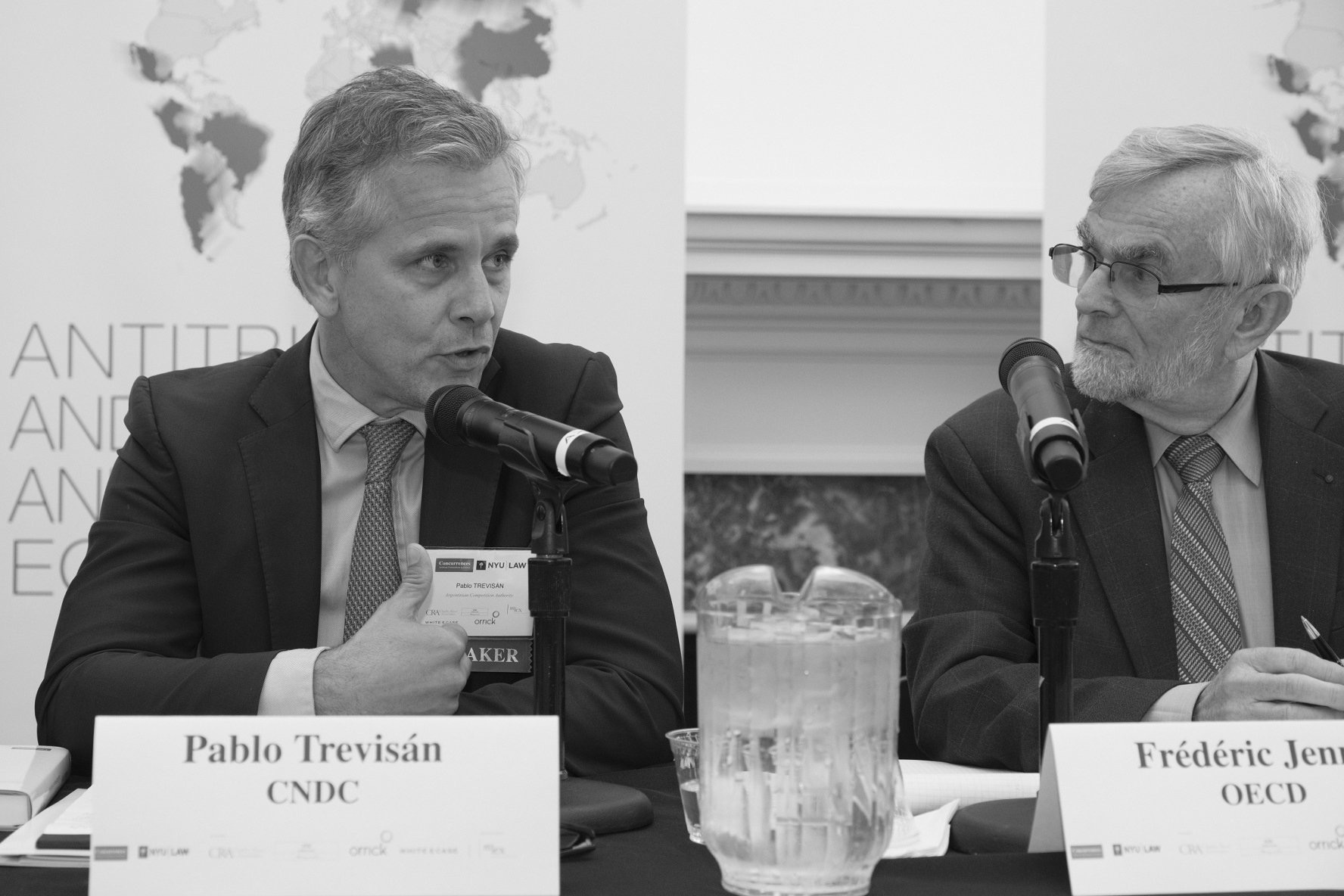
Today, Concurrences published a series of articles on «Antitrust and Developing and Emerging Economies», including Pablo Trevisán’s, Argentine Kintsugi. A summary of the article can be found in this brief video.


Watch Out! Competition Law and Policy are not Quarantined 150 150 Pablo Trevisán

Watch Out! Competition Law and Policy are not Quarantined

(This article was originally published by Pablo Trevisán on LinkedIn Pulse, on 5th April, 2020; link).

200403 image_190607_wolves_pr

Competition Law 27,442 (LDC), passed in May 2018, included several important innovations into the Argentine competition law regime.

Among others, it expanded the powers of the competition authority, which gave it greater independence, placing special emphasis on the seriousness of certain behaviours, in particular, collusive behaviour between two or more competitors.

The purpose of this brief comment is not to expand on the detail of the various developments of the LDC, we only try to make a few brief considerations about a new institute that received the LDC and that, apparently, has been overlooked to date.

We refer to Section 29 of the LDC, which provides: «The Competition Tribunal, in accordance with the provisions of the regulations, may by reasoned decision issue permits for the performance of contracts, agreements or arrangements that contemplate conducts included in Section 2 hereby, that at the discretion of the Tribunal do not constitute prejudice to the general economic interest. ”

It is important to remember that the new Section 2 of the LDC, referred to in Section 29, lists a series of conducts related to agreements between two or more competitors that, according to the new LDC, would constitute «absolutely restrictive practices of competition», it would be presumed «that produce damage to the general economic interest», would be «null» and «would produce no legal effect»; in addition to being liable to sanctions that may exceed several thousand million pesos.

The permits of Section 29 of the new LDC, can be a very valuable tool in certain circumstances, as long as they are used according to their purpose, on very particular cases and for duly justified reasons.

The situation we are currently facing, as a consequence of the various negative effects of the Covid-19 pandemic, provides the perfect framework to understand what this institute is about and to apply it in the way for which it was conceived by the legislator.

Since last month, we witnessed innumerable regulations that have been issued by the Executive Branch (as well as by the various provincial and municipal authorities, and various organizations).

During these weeks, the rule has been to hear references to concepts such as critical supplies, maximum prices, requests for increased production, various financial assistances, alleged shortages of certain products and medicinal, cleaning and sanitary supplies, among others.

For its part, the Ministry of Internal Commerce (SCI) resolved the suspension of procedural deadlines in the files that are processed by the National Commission for the Defence of Competition (CNDC). Notwithstanding this, an emergency filing mechanism was established and, although remotely, the CNDC and its entire team continue to work actively.

Likewise, around the world, the different competition authorities have also been reacting according to their respective situations and according to their applicable regulatory frameworks.

On the other hand, there have been many voices that suggest «mitigating», «relaxing» or «lessening» the application of competition rules, both in our country and abroad. We believe that this can be a very dangerous and unnecessary simplification, depending on how, when, where and for how long it is proposed.

In the case of our country, we start from the premise that Section 1 of the LDC provides that the Argentine competition regime protects the “general economic interest”. Said in more general terms, and leaving other more technical considerations aside, the general economic interest referred to by the LDC is none other than the public interest, applied to competition law and policy.

That said, it should be noted that the standards, principles and, not least, the spirit of the LDC continues – and must continue! – to have full force, even – or even more! – in the current situation of Covid-19.

In other words, collusion with a competitor continues to configure behaviour that is absolutely restrictive to competition and is presumed to cause damage to the general economic interest (Sections 2 and 3); abusing a dominant position in a certain market, either by setting abusive prices that impact consumers or by carrying out behaviours that could exclude competitors (Section 3, 5 and 6) or by carrying out economic concentrations whose object or effect is to restrict competition (Section 8), are still prohibited conduct under the LDC (Section 1).

However, it cannot be ignored that the different rules recently issued with the noble purpose of containing the spread of the pandemic in our country, could imply that certain people, whether they are natural (human) or legal persons, could be involuntarily immersed in complex situations, which could be framed in some of the previously mentioned behaviours.

In practice, there could be a collision of legitimate interests between various rules and behaviours, such as the interests that are intended to protect competition and those that are genuinely intended to protect the various health emergency rules issued during the last month.

To better illustrate, it would not be unusual for supermarkets or other players in the retail or consumer market distribution chain, at some point in the advance of the pandemic, to coordinate their behaviours to guarantee the provision of food; or that laboratories, distributors, drug wholesalers, pharmacies or others, must also agree on how to face the demand and supply of certain medicines or critical supplies in different regions of our country, just to name two critical areas -consumption and health- that, most likely, will be the most affected as the spread of the pandemic in our country progresses.

It is here where Section 29 of the new LDC takes its real dimension. Those entrepreneurs who find themselves in the aforementioned situation, on the one hand, are not exempt from complying with the competition rules, but on the other, they must also comply with the emergency rules.

In order to fully comply with the latter, the SCI –following the prior opinion of the CNDC- should analyse these cases and, if appropriate, issue clear permits, duly founded and of limited temporal and geographical scope, which would give certainty to all those who are faced with this dilemma.

Likewise, it could be the interested parties who may request these permits from the competition authority, justifying the reasons why they should be issued and, clearly, without them involving a letter of indemnity to commit any type of anti-competitive conduct.

If this is achieved, we will have successfully balanced the conflicting interests, probably contributing to a more optimal attack on the pandemic in the joint efforts of the public and private sectors, and, finally, the permits of the novel Section 29 of the LDC will have given birth healthily.


[1] Texto Ordenado de la Ley de Defensa de la Competencia 27.442 (acceso al enlace al 3 de abril de 2020): http://servicios.infoleg.gob.ar/infolegInternet/anexos/310000-314999/310241/norma.htm

[2] Art. 2, LDC: “Constituyen prácticas absolutamente restrictivas de la competencia y se presume que producen perjuicio al interés económico general, los acuerdos entre dos o más competidores, consistentes en contratos, convenios o arreglos cuyo objeto o efecto fuere: a) Concertar en forma directa o indirecta el precio de venta o compra de bienes o servicios al que se ofrecen o demanden en el mercado; b) Establecer obligaciones de (i) producir, procesar, distribuir, comprar o comercializar sólo una cantidad restringida o limitada de bienes, y/o (ii) prestar un número, volumen o frecuencia restringido o limitado de servicios; c) Repartir, dividir, distribuir, asignar o imponer en forma horizontal zonas, porciones o segmentos de mercados, clientes o fuentes de aprovisionamiento; d) Establecer, concertar o coordinar posturas o la abstención en licitaciones, concursos o subastas. Estos acuerdos serán nulos de pleno derecho y, en consecuencia, no producirán efecto jurídico alguno.”

[3] La reglamentación del art. 29, mediante el Decreto 480/2018, dista de ser abarcativa y clara; por lo que se requiere una nueva reglamentación, que respete cabalmente el espíritu de la LDC.

[4] https://www.boletinoficial.gob.ar/detalleAviso/primera/227413/20200403

[5] https://www.argentina.gob.ar/defensadelacompetencia/presentaciones-urgentes-covid (último acceso, 3 de abril 2020).

[6] Por ejemplo (en todos los casos, último acceso, 3 de abril 2020): (i) EE.UU.: Declaración Conjunta del FTC y el DOJ: https://www.ftc.gov/news-events/press-releases/2020/03/ftc-doj-announce-expedited-antitrust-procedure; (ii) Europa: Declaración de la European Competition Network, https://ec.europa.eu/competition/ecn/202003_joint-statement_ecn_corona-crisis.pdf; (iii) Reino Unido: CMA – Task Force para el COVID-19, https://www.gov.uk/government/publications/covid-19-cma-taskforce/cma-covid-19-taskforce; (iv) Australia: ACCC Autoriza Ventas Coordinadas entre Mayoristas en Mercado de Medicamentos, https://www.accc.gov.au/media-release/medicine-wholesalers-to-co-operate-on-access-to-pharmaceutical-products; (v) Noruega: Konkurranse Tilsynet – Autoridad de Competencia de Noruega, Otorga Excepción Temporal a Sector de Transporte, https://konkurransetilsynet.no/transportation-sector-is-granted-temporary-exception-from-the-competition-act/?lang=en; (vi) Sudáfrica: Comisión de Competencia – Inusual, por COVID-19, recibe más de 500 Denuncias por Precios Excesivos, http://www.compcom.co.za/wp-content/uploads/2020/03/CCSA-COVID-19-statement-31-March-2020-Final-1.pdf; (vii) Chile: FNE – Declaración Pública, https://www.fne.gob.cl/declaracion-publica/, entre otros.

[7] Por ejemplo, consideraciones respecto a si ello se refiere más al bienestar de los consumidores, de los productores, de ambos, o a otras finalidades.

Reparación del daño antitrust. A propósito de la nueva directiva 2014/104 de la UE. 150 150 Pablo Trevisán

Reparación del daño antitrust. A propósito de la nueva directiva 2014/104 de la UE.

Nuestro sistema de ejecución de las normas de competencia se ha basado históricamente en un sistema de ejecución casi exclusivamente pública, mediante las sanciones propias de la autoridad de competencia. Algo similar ha ocurrido en Europa y Latinoamérica en general. En los Estados Unidos, por el contrario, la ejecución privada tuvo un desarrollo sostenido e importante, habiéndose iniciado por esta vía más del 90% de los casos antitrust.

Reparación de Daños por Infracciones a las Normas de Competencia – La UE y la Argentina 150 150 Pablo Trevisán

Reparación de Daños por Infracciones a las Normas de Competencia – La UE y la Argentina

Para leer el trabajo completo, acceda mediante el siguiente link:

150227 Análisis Comparativo Daños Antitrust ARG EU – PDF Publicado en La Ley


Política de Defensa de la Competencia: Otra Oportunidad Perdida 150 150 Pablo Trevisán

Política de Defensa de la Competencia: Otra Oportunidad Perdida

Para leer el artículo completo, acceda mediante el siguiente link: Competencia: Otra Oportunidad Perdida


Antitrust Policy: Pending Debate 150 150 Pablo Trevisán

Antitrust Policy: Pending Debate

President Cristina Kirchner introduced three bills before the Congress concerning consumer relations to establish a new conflict resolution system, create a Price Observatory and amend the Supply Law.  

Such bills were passed by several committees of the Senate and will be discussed this week by the full Senate House. In addition to the amendment of the Supply Law, such bills will introduce significant changes in competition issues. Here, we would like to focus on the major of such issues: the bill specifically designates the Secretary of Trade as its enforcement authority. 

Thus, the creation of the National Court for the Defense of Competition (the Tribunal Nacional de Defensa de la Competencia, the “TDC”) as set forth in the Antitrust Law of 1999 would never be carried out. That is, the enforcement authority would no longer be a court independent from the Executive Branch, made up of members appointed on the basis of credentials and holding office for a specific amount of time, but a centralized authority reporting to the Executive Branch. This would be a legal recourse to avoid the creation of the TDC, something that all government authorities have been doing since 1999.  

The proposed change opposes Supreme Court’s decisions, which ordered the Executive Branch on several occasions to create the TDC, and considered that such an omission is a “legal scandal” (competent Appellate Courts’ decisions were similar).

It should be reminded that the LDC established the National Commission for Defense of the Competition (the Comisión Nacional de Defensa de la Competencia) as a temporary authority. This temporary appointment turned into something permanent. 

Even when countries more developed than Argentina have authorities strongly dependent on the central administration (for instance, USA in certain aspects), the positive experience of other countries with more independent authorities (such as Chile) shows that this is not only possible but also desirable. 

Contrary to what the bills propose in this respect, we understand that under a system which guarantees independence from the Executive Branch (similar to the one proposed by the LDC), higher guarantees may be granted, particularly in countries like Argentina, with Governments featured by excessive intervention. We sustain this, even considering that there are mechanisms to protect strategic political interests which could also be implemented. 

Such major changes should be the consequence of a serious, ordered and deep debate in which the participation of academic, professional, consumer and business institutions should be encouraged. 

The debate to define which antitrust policy is necessary for Argentina is long pending. Regulations in this matter have been relatively appropriate. However, we lack a clear policy to enforce such a law with foreseeability and certainty.   

Let´s hope these bills allow the debate to finally take place, so that we may finally have not only a good law but also a serious and reliable antitrust policy. 

To read the full comment (in Spanish), click on the following link: Política en Defensa de la Competencia: un debate pendiente – por Pablo Trevisán

Política de Defensa de la Competencia: un debate pendiente 150 150 Pablo Trevisán

Política de Defensa de la Competencia: un debate pendiente

La Presidenta envió al Congreso proyectos de ley con el objeto de establecer un nuevo sistema de resolución de conflictos en las relaciones de consumo, crear el Observatorio de Precios y modificar la Ley de Abastecimiento.

Los mencionados proyectos, que el martes obtuvieron dictamen del Senado y serán tratados en sesión la semana próxima, además de lo referido a la Ley de Abastecimiento y defensa del consumidor, incorporan importantes cambios en materia de defensa de la competencia. Pretendemos destacar aquí uno: el que dispone, mediante sustitución de ciertos artículos de la Ley de Defensa de la Competencia (‘LDC‘), que la autoridad de aplicación de la LDC pasaría a ser la Secretaría de Comercio.

De esta forma, se dejaría sin efecto la creación del Tribunal Nacional de Defensa de la Competencia (‘TDC‘) de la LDC de 1999 (el cual nunca fue puesto en funciones). Es decir, se eliminaría el sistema en el que la autoridad de aplicación es un tribunal autárquico, con atribuciones propias y cierta independencia del Ejecutivo, integrado por miembros elegidos por concurso de antecedentes y que duran en sus cargos un tiempo determinado, para consolidar una autoridad centralizada y dependiente del Ejecutivo. Así, se consolidaría legalmente lo que de facto los sucesivos gobiernos nacionales han venido haciendo desde 1999 al omitir la puesta en funcionamiento del TDC.

El cambio propuesto no se condice con las manifestaciones de la Corte Suprema sobre el particular, quien ha instado reiteradamente al Ejecutivo a que ponga en funcionamiento el TDC y ha considerando que semejante atraso constituye un ‘escándalo legal‘ (en línea similar se han manifestado las Cámaras de Apelación competentes).

Vale recordar que la LDC, mantuvo como autoridad transitoria a la Comisión Nacional de Defensa de la Competencia (‘CNDC‘). Esta transitoriedad se tornó en permanente habiendo transcurrido tantos años desde la sanción de la LDC.

Aun cuando algunos países más desarrollados que el nuestro presentan esquemas de autoridades fuertemente dependientes de la administración central (ej. los EEUU en ciertos aspectos), la experiencia positiva que arrojan otros sistemas que otorgan mayor independencia a las autoridades de aplicación (ej. Chile), es clara muestra de que ello no solo es posible, sino también conveniente.

Contrariamente a lo propuesto en los proyectos, entendemos que bajo un sistema que garantice cierta independencia del Ejecutivo, similar al propuesto bajo la LDC, se otorgan mayores garantías en un país como el nuestro en el que el Estado tiende a tomar injerencia desmedida en estas cuestiones. Esto lo sostenemos, sin dejar de considerar que existen mecanismos que permiten salvaguardar aquellos intereses políticos estratégicos que el Estado quisiere proteger, los cuales pueden ser implementados paralelamente.

Cambios tan trascendentes deben ser consecuencia de un debate serio, ordenado y profundo, permitiendo que instituciones académicas, profesionales, de consumidores y empresarias tengan voz y un rol activo en la discusión.

El debate para definir qué política de defensa de la competencia necesitamos los argentinos, nos lo debemos hace mucho tiempo. Hemos tenido una regulación relativamente adecuada en la materia. Sin embargo, nos ha faltado una política clara, que ejecute la ley con previsión y seguridad jurídica.

Sirvan los proyectos para que el debate se dé finalmente y tengamos no solo una buena ley, sino una seria política de defensa de la competencia.

Acceda al artículo mediante el siguiente link: Política en Defensa de la Competencia: un debate pendiente – por Pablo Trevisán


CFK presenta proyectos de ley 150 150 Pablo Trevisán

CFK presenta proyectos de ley

Los mencionados proyectos contienen ciertas disposiciones que incorporarían importantes cambios a la regulación y política en materia de defensa de la competencia. En particular, nos referiremos a ciertas disposiciones propuestas bajo el “Proyecto de Ley sobre Sistema de Resolución de Conflictos en las Relaciones de Consumo” (el “Proyecto”) que, de promulgarse, podría tener un fuerte impacto en dicha materia.

De los principales cambios que presenta el Proyecto en defensa de la competencia, uno de ellos interesa especialmente y se destaca por sobre los demás: el que dispone que la autoridad de aplicación de la Ley de Defensa de la Competencia Nro. 25.156 (la “LDC”) pasaría a ser la propia Secretaría de Comercio.

Es importante recalcar que el art. 58 de la LDC (sancionada en 1999), mantuvo como autoridad transitoria a la CNDC hasta tanto se ponga en funciones el Tribunal Nacional de Defensa de la Competencia (“TDC»). Esta transitoriedad de la norma dispuesta por el legislador, se tornó en permanente habiendo transcurrido tantos años desde la sanción de la LDC. Ello, sin embargo, no ha sucedido sin inconvenientes en el camino, ya que numerosos fallos judiciales de los últimos años, han desconocido las facultades de la CNDC y la Secretaría de Comercio (por ejemplo, para dictar medidas cautelares).

El artículo 65 del Proyecto, mediante la sustitución de los artículos 17 al 22 de la LDC, establece a la Secretaría de Comercio del Ministerio de Economía y Finanzas Públicas como la autoridad de aplicación de la LDC. De esta forma, se dejaría sin efecto la creación del TDC dispuesta bajo la LDC en 1999.

Cabe destacar que, a pesar de su creación bajo la LDC en aquel año, las sucesivas administraciones centrales han omitido poner en funciones al TDC hasta el día de la fecha. Asimismo, es propicio recordar las últimas manifestaciones de la Corte Suprema de Justicia de la Nación (“CSJN”) sobre el particular, instado al Poder Ejecutivo a constituir y poner en funcionamiento el TDC creado bajo la LDC en 1999 y considerando dicho atraso como un «escándalo jurídico» (CSJN; confr. casos “Belmonte», «Credit Suisse», “Recreativos Franco”, por ejemplo). En línea similar se han manifestado las Cámaras en lo Penal Económico (confr. causas “Telefónica de España, Olimpia y Otros”) y en lo Civil y Comercial Federal (confr. “Cablevisión”, “DirecTV”).

Consideramos que los cambios que propone el Proyecto enviado por el Ejecutivo al Congreso son significativos e implicarían un cambio sustancial en la regulación y política de Defensa de la Competencia. En consecuencia, creemos que es muy importante que para que se den estos u otros cambios de similar trascendencia en la materia, los mismos deben ser consecuencia de un debate serio, ordenado y profundo, permitiendo que instituciones académicas, profesionales, de consumidores y empresarias tengan voz y un rol activo en la discusión.

Compensation for damages for infringement of antitrust laws 150 150 Pablo Trevisán

Compensation for damages for infringement of antitrust laws

Even though compensation for damages as a result of infringements of competition rules has only recently initiated its path in Argentina, there are sufficient factual and legal bases for such actions to grow.

The political and socio-economic realities of Argentina reflect a serious lack of institutionalism concerning antitrust matters and, in turn, there is a significant degree of misinformation on the matter, not only among consumers and firms but also within the legal profession as a whole (i.e., including both lawyers and judges).

Antitrust private enforcement rules provided for under Law No. 25,156 (“Antitrust Law”), by means of general rules of civil liability, supplement and reinforce the public enforcement in charge of the State by means of its law enforcement bodies. This sort of mixed system –as it happens in every jurisdiction with a consolidated system of competition law- provides more protection to the public and private interests and may become a useful tool for the protection of the rights of individuals and legal entities that may be affected by this type of infringements. In jurisdictions like Argentina, where the mentioned lack of institutionalism is so evident, the importance of private enforcement of competition rules is even more pronounced.

We believe that, if damages actions for antitrust violations are finally consolidated, we will be experimenting a new dimension of antitrust law in Argentina, which will undoubtedly result in new advantages, both for consumers and for firms equally, will provide more institutionalism and, more importantly, will contribute to furthering the protection of the general economic interest, which is the ultimate purpose of the Antitrust Law.

To read the full content, please click the following link: Compensation for damages for infringement of antitrust laws – Pablo Trevisán

Indemnización de daños y perjuicios por infracciones a las normas de defensa de la competencia 150 150 Pablo Trevisán

Indemnización de daños y perjuicios por infracciones a las normas de defensa de la competencia

La jurisprudencia y doctrina actuales en Argentina no otorgan un tratamiento acabado del tema bajo análisis. Existe solo un caso resuelto sobre este tema específico en los tribunales del país y hay una carencia casi absoluta de investigación doctrinal sobre el particular. El tema es de gran importancia y su consolidación, fundamentalmente mediante investigación y abogacía, otorgará nuevas y sustanciales herramientas tanto a abogados como a jueces que así podrán estar más preparados para presentar y juzgar, respectivamente, este tipo de casos, de manera mucho más satisfactoria.

De consolidarse las acciones de reparación de daños por ilícitos anticompetitivos, estaremos a las puertas de una nueva dimensión del derecho de defensa de la competencia en nuestro país. Ello redundará en nuevos horizontes beneficiosos, tanto para consumidores como para empresas, y otorgará mayor institucionalidad a la materia y, más importante, contribuirá a una mayor protección del interés económico general, fin último de la LDC.

Para leer el trabajo completo, acceda mediante el siguiente link:

Indemnización de daños y perjuicios por infracciones a las normas de defensa de la competencia – Pablo Trevisán